
All about Setar: History and Origin
Introduction
At the core of Persia echoes a narrative as ancient as existence itself, intertwined by the heartfelt strings of the setar. This device, a manifestation of heritage, civilization, and craftsmanship, narrates tales that traverse eras, captivating every auditor with its magical charm. Originating from the age-old deserts and reverberating through the annals of history, the setar crafts a sonic landscape as detailed as Persian carpentry and as vast as its poetic heritage.
One may ponder what sets the setar apart amid the myriad of musical devices globally. In its undulating melodies, its attractive appearance, and the age-old Persian narratives it recounts, we discover its uniqueness. Individuals occasionally confuse it with the ‘setaar,’ but the setar is distinct. Its moniker and sound traverse locales, drawing people into emotions of profound affection, longing, and dreamlike beauty.
In the modern rhythm’s spiraling cosmic dance that spans continents, a peculiar and intense desire emerges—a craving for the resonating echoes of yesteryears. As today’s musical fabric unfolds at a head-spinning speed, a voracious group of audio enthusiasts, history nomads, and soul questers is arising from the mists of history, attracted not only to the physical strings and timber but to the celestial tunes ingrained in its very core.
What Is the Persian Setar?
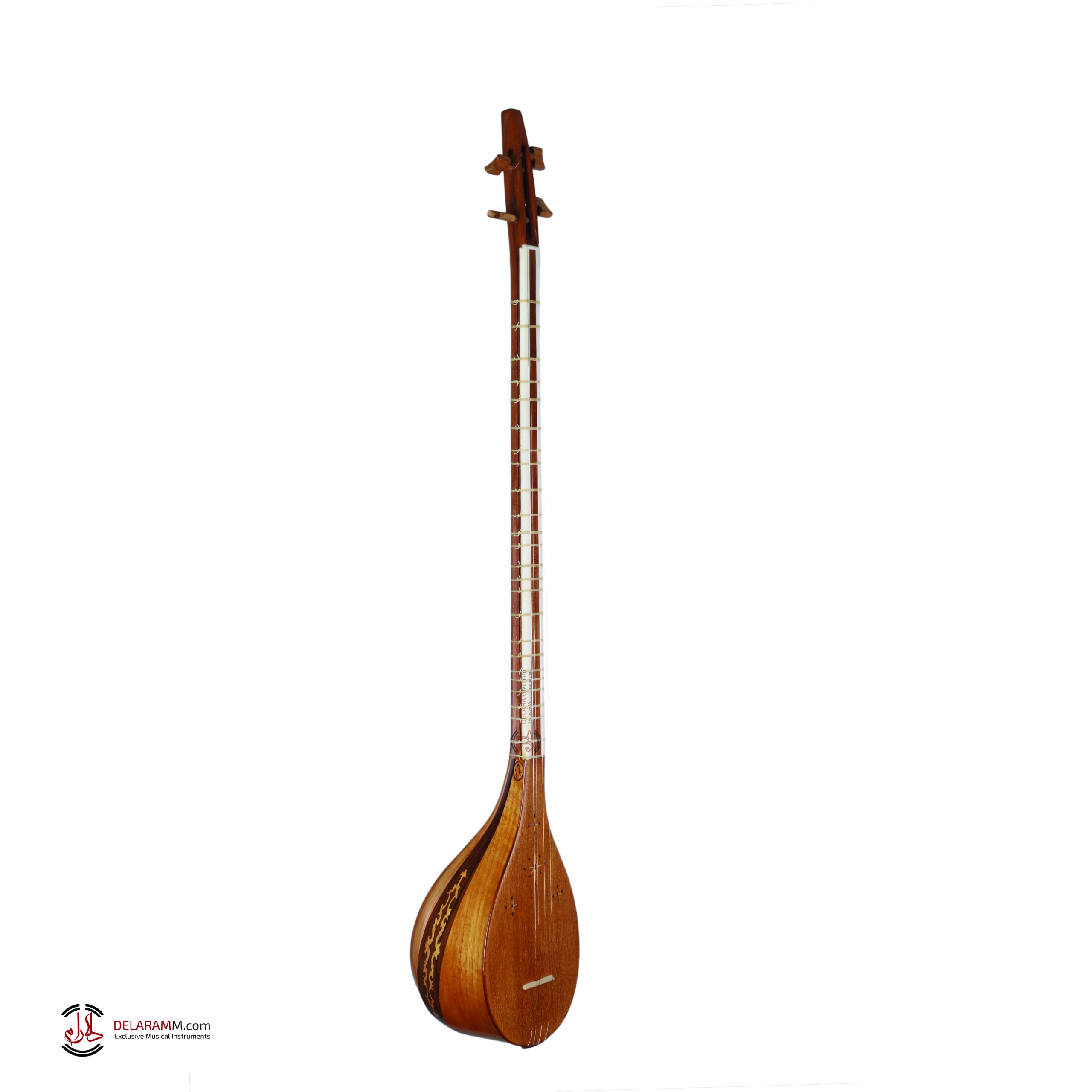
The setar is a Persian long-necked lute belonging to the broader family of chordophones. It has a pear-shaped body, a narrow neck, and four metal strings, though its name originally referred to a three-stringed instrument. The word setar comes from Persian, where se means three and tār means string.
Unlike louder instruments such as the tar, the setar is known for its quiet, intimate sound. It is usually played with the fingernail of the right index finger rather than a plectrum, which gives it a softer and more nuanced tone. Because of its subtle voice, the setar has long been
The Meaning of the Word Setar
The name setar reflects a long-standing Persian naming tradition for stringed instruments. In this system, numerical prefixes are combined with tār to identify instruments by the number of strings they originally had. Examples include dotar for two strings and čahārtār for four strings.
This naming pattern is more than linguistic curiosity. It reveals how Persian musicians historically classified instruments according to function and structure. The survival of the name setar is especially important because the instrument later gained a fourth string while retaining its original identity.
The term tār also appears in many related instruments across West and South Asia, including the Indian sitar and other regional lutes. This shows the wide historical diffusion of Persian musical culture across the Silk Road and neighboring regions.
History and Origin of the Setar
Ancient roots and evolution
Within the broad scope of Persia’s historical chronology, a unique story unfolds—one that delineates the setar’s lineage. To simply label it as a device would be a minimization. The setar is fundamentally a narrative—a bold affirmation of Persia’s unyielding spirit and its steadfast romance with music.
The myth suggests that the setar’s origins delve deep into ancient Persia, during periods when poets composed verses beneath the moonlit heavens and craftsmen infused vitality into base materials. The setar, with its slim neck and hollowed form, became the inspiration for many. Across eras, it transformed and adjusted, yet always preserving its fundamental essence. This change was not only in its shape but also in its designation. While some historical documents referred to it as ‘setaar,’ the instrument eventually established its identity and resonance as the setar, unique and unparalleled.
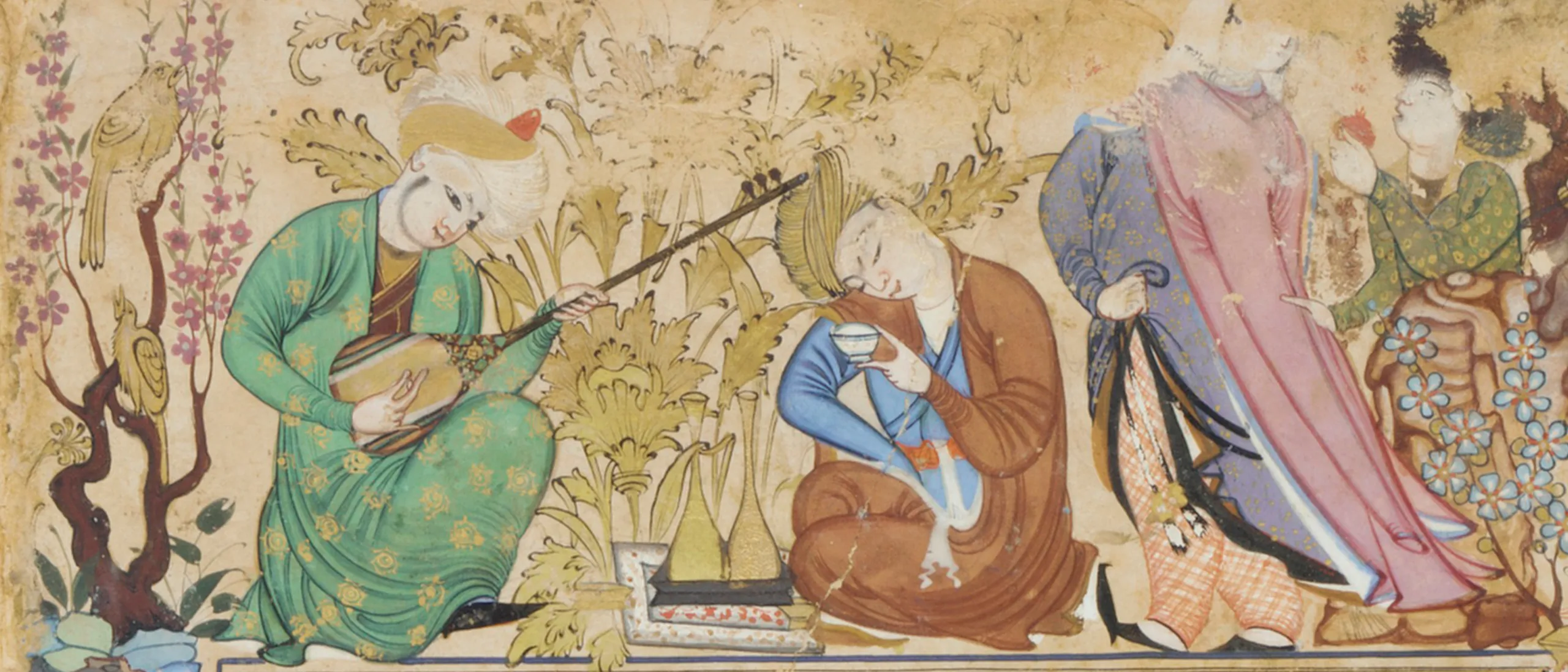
In the tumultuous fabric of ages and eons, the setar, with its eerie ballads, resembles a timeless enchantress serenading history. With narratives as lavish as sovereigns’ diadems, it interlaces murmurs of royal patronage and roving minstrels who journeyed across rolling terrains, the loyal setar nestled in their hold. It evolved into the lyrical record of eras of discord and tranquility, fervor and yearning, joy and sorrow. Through its strings, one could discern the throbbing tempos of a developing kingdom firmly rooted in forefathers’ rituals.
Now, as the clock’s hands swing between the past and the forthcoming, the setar surfaces are adorned in rejuvenated enthusiasm. Positioned upon the fluctuating sands of time, this esteemed relic bears witness to Persia’s intricate journey through the ages, encouraging souls to delve into its profundities, harmonize their being, and venerate the magnificent narrative it ceaselessly crafts.
Setar through the ages: Medieval to modern times
As the ancient world’s reverberations began to yield to the medieval era’s rhythms, the setar embarked on a journey of significant transformation. Ascending from Persia’s mystical domains, it found itself amidst evolving epochs, demonstrating its robustness and flexibility in every era.
During medieval times, the setar was no longer merely a companion to desert bonfires or a solitary minstrel’s inspiration. It entered the magnificence of Persian courts, vibrating through the marbled chambers, enchanting both nobility and common folk. Evolving from its basic shape, artists and artisans enriched it with detailed patterns while virtuosos refined its tones to create a harmonious fusion of beat and resonance.
Yet, as medieval Persia progressed into its later stages, an intriguing phenomenon started to shape the setar’s fate. With the expansion of trade pathways and the blending of cultures, the setar encountered both hurdles and prospects. There were devices of similar appearance, like the ‘setaar,’ but the setar’s uniqueness ensured its endurance and, moreover, its expansion.
Presently, from the bustling markets of Tehran to the global internet’s digital bazaars, the setar remains a coveted gem. Its transition from medieval to contemporary times is not only a testament to its lasting allure but also a reflection of Persia’s resilient spirit, where tradition and change harmoniously coexist, ensuring the setar’s everlasting heritage.
Anatomy and design of the Setar instrument
General structure and materials
The setar, a model of Persian artisanship, unveils itself as more than just a device when we examine its detailed anatomy. Similar to a historical relic, each component of the setar instrument shares stories of customs, innovation, and a steadfast dedication to acoustic superiority.
The body, usually the first element that grabs attention, embodies a holy geometry. Traditionally made from thin layers of mulberry wood or walnut, the body’s sound chamber is not only about visual charm. It is a careful design aspect ensuring that the setar conveys its distinct sound with precision and depth. To touch a setar’s body is to sense the very heartbeat of Persia, its vibrations a tribute to the numerous craftsmen who have formed and sculpted it over centuries.
Ascending from the body is the neck, a stretched bridge between the musician’s fingers and the instrument’s heartfelt melody. Often chiseled from a single piece of wood, the neck’s design stays an overlooked hero, offering stability and confirming the setar’s unique tones. It is not merely a pathway for the strings but a channel that transports legacies, reverberating the noises of the past.
Regarding strings, their importance in the setar instrument is unmatched. Initially, the setar, translating to ‘three strings’ in Persian, started its journey adorned with a set of three strings. As the musical subtleties and the requirements of musicians developed, a fourth string frequently found its position. These strings, typically made from steel or brass, move to the player’s directive, generating the setar’s signature sound and securing its place amidst Persian setar legends.
Comprehending the setar’s anatomy is similar to decoding the very essence of Persia’s musical principles. It is not merely about obtaining an instrument; it is about receiving an age-old story intertwined with artistry and enthusiasm.
The Fourth String and Mushtaq Ali Shah
One of the most important moments in the history of the setar was the addition of the fourth string. This innovation is traditionally associated with Mushtaq Ali Shah, a 18th-century Sufi mystic, poet, and musician. The new string was placed as a sympathetic drone, enriching the instrument’s resonance and expanding its musical possibilities.
Mushtaq Ali Shah’s legacy is both musical and symbolic. He is remembered not only for altering the instrument but also for representing artistic courage and spiritual devotion. According to tradition, he was executed in Kerman after being accused of blasphemy for playing music in a mosque.
The fourth string therefore carries a powerful cultural meaning. It is not only a technical addition, but also a reminder of the historical tension between creative expression and religious authority in Persian history.
Traditional vs. Modern designs
Traveling through the records of Persia, the setar, with its eternal allure, showcases a captivating contrast of design. As the winds of transformation brushed over the musical terrain, this iconic setar instrument encountered the unavoidable dance between tradition and modernity, and the outcomes have been nothing less than spellbinding.
Centuries past, the traditional setar resonated with simplicity and genuineness. Its design reflected the raw materials from which it was created, often molded by the hands of local craftsmen who infused their spirits into their masterpieces. The body, typically shaped from mulberry or walnut, displayed signs of natural flaws, making each setar a distinct piece. The neck, sturdy and solid, bore stories of the forests from which it was sculpted, and the strings, majorly three in count, vibrated with the rural charm of ancient Persia.
Modernity has instilled this Persian setar with innovative materials, smoother finishes, and, occasionally, even electronic enhancements for amplification. While the essence stays undoubtedly setar, these contemporary versions cater to the worldwide audience, merging the instrument’s soulful history with the needs of today’s music aficionados.
Yet, amidst this evolution, a gentle struggle surfaces: the battle between remaining loyal to the setar’s ancestral legacy and accepting the conveniences of modern craftsmanship. This juxtaposition, while creating diverse options, has led to enriching debates and discussions among setar enthusiasts. While some purists adhere to the traditional setar, arguing that its design embodies the true essence of Persia, others are captivated by the modern versions, valuing their adaptability and versatility.
In conclusion, whether one is drawn towards the traditional or the modern, the setar stays a symbol of Persia’s rich heritage, its designs a testament to an instrument that transforms yet stays eternally timeless.
Setar History at a Glance
| Period | Key Developments | Cultural Context |
|---|---|---|
| Pre-18th Century | Early forms of string instruments in Persian culture | Use in religious and mystical contexts by Sufi musicians |
| 18th Century | Addition of the fourth string by Moshtaq Ali Shah | Transition to more secular music, incorporation into Persian classical music |
| Qajar Dynasty (1789–1925) | Expanded role in Persian music ensembles | Integral to Persian classical music, used in Radif and folk music |
| Modern Day | Integration into contemporary genres | Fusion with other instruments, continued use in classical and world music |
Cultural and Musical Significance of the Setar
Role in Persian classical music
The setar, surpassing its physical structure, has profoundly entrenched itself in the cultural consciousness of Persia. In the constantly changing symphony of Persian classical music, the setar instrument stands as a symbol of tradition and genuineness. Its role extends beyond being an instrument to being a carrier of heritage, transmitting stories, feelings, and legacies.
Persian classical music, renowned for its detailed scales and expressive tunes, finds in the setar an unparalleled companion. The pliable strings and resonant body of this instrument can encapsulate the intricacies and subtleties of Persian dastgahs, delivering compositions with unparalleled depth. Whether accompanying a ghazal or being the main focus of a dastgah, the setar’s role in Persian classical music is monumental.
In bygone eras, masters used the setar to captivate courts and commoners alike. Today, amidst the modern world’s noise, conservatories still honor the setar, instructing enthusiastic students in the ageless art of playing this iconic Persian setar.
Traditional compositions
The setar has been the foundation of numerous traditional compositions, each narrating a story, reflecting emotions of love, loss, happiness, and sadness. These compositions passed down through generations, have preserved not only music but also the stories of ancient Persia, narratives that might have been lost if not for the setar instrument’s enduring resonance.
Consider the dastgahs, the modal systems that underpin Persian classical music. Traditional compositions for the setar are often crafted around these, with each note, each pause, capturing a spectrum of emotions. These compositions are not merely musical pieces; they are living, breathing entities that encapsulate the heartbeat of Persia.
In an era where the setar has garnered worldwide interest, traditional compositions have become even more vital. They act as a bridge, linking modern enthusiasts to the age-old traditions of the setar, allowing them to momentarily touch the very essence of Persia.
As more people globally are attracted to the setar’s charm, these compositions remind them of its origins, its history, and its enduring importance. Each strum, each melody, becomes a celebration of the past, a recognition of tradition, even as the world around it continuously evolves.
Prominent compositions involving the setar
Within the broad tapestry of Persian musical artistry, several compositions have centered the setar, enabling it to unravel its narrative, enchanting listeners across epochs. Each composition is not just a collection of harmonies but a deeply interwoven tapestry of historical narratives, profound emotions, and enduring legacies.
Some of the most transcendent compositions are intrinsically connected to the setar’s versatility. The heartfelt rhapsodies of “Radif,” for example, are ancient collections of melodies. These repertoires, when performed on the setar, resonate with indescribable depth, eliciting a range of emotions from deep sadness to ecstatic happiness. Meanwhile, pieces like “Chaharmezrab” demonstrate the instrument’s capability to deliver fast, rhythmic, and intricate sequences, highlighting the setar’s versatility.
Yet, it is not only the classical compositions that have showcased the setar’s brilliance. Modern masters have embraced the instrument, creating contemporary pieces that, while grounded in tradition, resonate with today’s world’s rhythms. The setar, thus, bridges the ancient and the modern, ensuring its melodic voice is heard across time.
Symbolism in Persian culture and literature
Beyond its musical magnificence, the setar’s importance extends into the realm of symbolism within Persian culture and literature. For poets and sages, the setar has been more than an instrument—it has been an inspiration, a metaphor, and a medium.
In Persian literature, particularly in the works of luminaries like Hafez and Rumi, the setar often appears as a symbol of divine love, spiritual desire, and the human soul’s intertwined dance with the universe. Its strings are not merely viewed as sources of music but as pathways connecting the earthly to the heavenly. The instrument’s resonance is often likened to the heart’s vibrations, pulsating with love, yearning, and lament.
Furthermore, the setar, in its symbolism, stands as a testament to Persian resilience and evolution. Its design, its sound, and its journey reflect the trials, victories, and transformations of Persian culture itself. It becomes a mirror of society’s values, its passions, and its enduring spirit.
As we navigate the expansive corridors of Persian cultural memory, the setar remains a constant – a silent observer, an active participant, and a symbol of an ethos that refuses to fade, ensuring its melodies and symbolism persist, reverberating through the annals of time.
Mastering the Setar: A Guide to Basic Techniques and Tutorials
Embarking on the mystical journey of mastering the setar begins with understanding its fundamental techniques. Tutorials are essential for newcomers as they provide an entry point into this mysterious world. Proper posture is crucial, typically involving sitting cross-legged and holding the slender body of the setar, which ensures a close connection and stability. The strategically placed frets require agility as the fingertips glide, press, and stroke, converting feelings into tunes.
Key tutorials often explore “goosheh,” specific melodic patterns integral to Persian music. Each “goosheh” is a unique yet interconnected story, contributing to the larger narrative of a musical composition. Through these tutorials, beginners can piece together the fabric of Persian musical tradition, one “goosheh” at a time.
Variety of Plucking Techniques
The voice of the setar, harmonized by its strings, is animated by a diverse range of plucking techniques. The foundational plucking method, “zahkhme,” resembles a murmur, a gentle touch on the string. Another technique, “rebâbî,” is a deeper, resonating pluck reminiscent of the historic rebâb instrument, eliciting feelings ranging from deep reflection to exhilarating joy.
However, the versatility of the setar does not stop there. “Serkhâneh” involves a series of rapid plucks, expressing a flurry of emotions in quick succession. On the other hand, “mordâneh” is a softer pluck, more of a caress than a tempest. This dynamic range of plucking techniques ensures that the setar when played by adept hands, can narrate stories of both turbulent tempests and peaceful oceans, captivating listeners with its extensive emotional range.
Methods of Tuning
Tuning the setar is a sacred act, a dialogue between the musician and the instrument. This is when the setar’s voice is honed, harmonized, and revitalized. Generally, the setar operates within a fixed range, with its strings tuned to C (do), G (sol), and two finer strings tuned to C (do) again. However, this is flexible. Depending on the raga or dastgah being performed, the tuning may vary to encapsulate the intended emotional quality and resonance.
While modern tuners provide accuracy, traditionalists may argue that the true essence of tuning lies in the listener’s ear. A deep understanding of the setar’s voice, recognizing its whispers and roars, is vital. It is this harmony, this interplay between knowledge and intuition, that ensures the setar expresses its most genuine and evocative voice.
Understanding Musical Scales
Venturing into the world of the setar, one quickly realizes it is not merely an instrument but a universe of sounds, emotions, and stories governed by scales. The dastgahs, intricate modal frameworks, form the foundation of the setar’s musical narratives. They are more than just scales; they are emotional spectrums, with each note infused with narratives, nuances, and tones deeply embedded in Persian culture.
For example, the dastgah of “Shur” encompasses a spectrum of emotions, from reflective to exhilarating. Then there is “Nava,” resonating with nostalgia and sorrow, painting sonic landscapes of desire and affection. These musical scales are not linear but cyclical, revisiting emotions and stories, much like the journey of life.
In the hands of a master, the setar’s strings breathe life into these dastgahs, creating vivid images that resonate with both personal experiences and shared memories. Each strum, each pause, contributes to a larger symphony, a symphony directed by these ancient scales.
Renowned Setar Players and Their Contributions
Throughout history, many have held the setar, but only a few have truly engaged with it, leaving lasting impressions on its musical landscape. These masters, with their unmatched skills and profound understanding of the setar, have guided its journey, ensuring its legacy persists.
Mohammad Reza Lotfi, a great master in the setar world, revolutionized its soundscape. By blending tradition with innovation, Lotfi’s contributions have been pivotal, broadening the setar’s language and making it relevant to both old and new audiences.
Kayhan Kalhor, a master known for the Kamancheh, has also experimented with the setar, infusing it with a global essence. His collaborations have brought the setar to international stages, harmonizing Persian tones with worldwide rhythms.
Ostad Mirza Abdollah, often regarded as the pioneer of modern setar playing, laid the groundwork for contemporary masters. His techniques, compositions, and teachings continue to influence setar education.
While these luminaries have been guiding lights, the journey of the setar is marked by numerous unsung heroes. Artisans who craft it, teachers who share its techniques, and countless musicians who, in dimly lit rooms and grand stages alike, make the setar sing.
The Setar in Today’s World
Blending into worldwide music styles
Today’s music scene is a vibrant mix of sounds, a merging of old and new, and inventive creations. In this milieu, the setar, with its deep-rooted Persian character, has effortlessly merged, synchronizing with modern beats, tempos, and tunes. It is a time when distinctions fade, where a setar can reverberate in a jazz lounge in New Orleans or vibrate in an electronic dance tune reverberating in a club in Berlin.
Reflect on the jazz domain, where spontaneity meets organization. The setar, naturally adaptable with its dastgahs, aligns with jazz’s unrestrained explorations. Their combination results in a captivating auditory landscape—classic Persian tunes interlaced with the irregular pulse of jazz, crafting a sound that defies categorization.
Likewise, in the electronic music domain, the setar’s strings have discovered a fresh terrain. Synthesizers and digital rhythms, contrasted with the acoustic tone of the setar, craft an auditory landscape where the old and the futuristic intersect.
Modern performers and groups utilizing the setar
The current music scene is peppered with performers and groups unhesitant to fuse traditions to let the setar interact with contemporary instruments and styles. This tendency is not confined to Persia; it is worldwide, highlighting the setar’s global charm.
Musicians like Sahba Motallebi have been crucial in this area. A master of the setar, Sahba has ventured past traditional limits, experimenting with worldwide styles, from flamenco to blues, enabling the setar to express in ways it hasn’t previously.
Additionally, there are groups like “Niyaz,” which, although grounded in Persian and Middle Eastern traditions, are not reluctant to embrace electronic blends. Their compositions frequently highlight the setar, not as a bygone artifact but as a current voice, resonating with both ancient narratives and modern stories.
Beyond individual performers and groups, music festivals globally now regularly showcase the setar. It is presented not as a novelty but as an affirmation of music’s evolving character—where a Persian instrument finds a connection with a global audience, reminding us of music’s unifying nature.
Conclusion
In a world inundated with a plethora of musical instruments, each articulating its distinct melody, the setar, with its deep hues and poignant tunes, stands as a pillar of Persian musical heritage. Yet, its allure surpasses geographical and political boundaries. It is not simply an instrument native to a specific locale; it has, over time, evolved into a worldwide emblem of soulful reverberation.
Why, one might ponder. The explanation lies not merely in its strings or its wood but in the narratives it conveys. Every note is a saga, every melody an expedition. The setar doesn’t merely perform; it communicates. To a nomadic spirit in Europe, it murmurs of desert breezes. To an elderly individual in Asia, it recounts the transient dance of youth. Its global charm, paradoxically, resides in its unique character. In a world of uniformity, the setar remains defiantly, exquisitely singular.
FAQ
The Persian setar is a traditional long-necked lute used in Iranian classical music. It is known for its soft sound and four-string structure.
The name comes from Persian: se means three and tār means string. The instrument originally had three strings.
It is played with the fingernail of the right index finger instead of a pick or plectrum.
Yes, the setar has strong spiritual associations and is often linked to Sufi devotion and contemplation.