
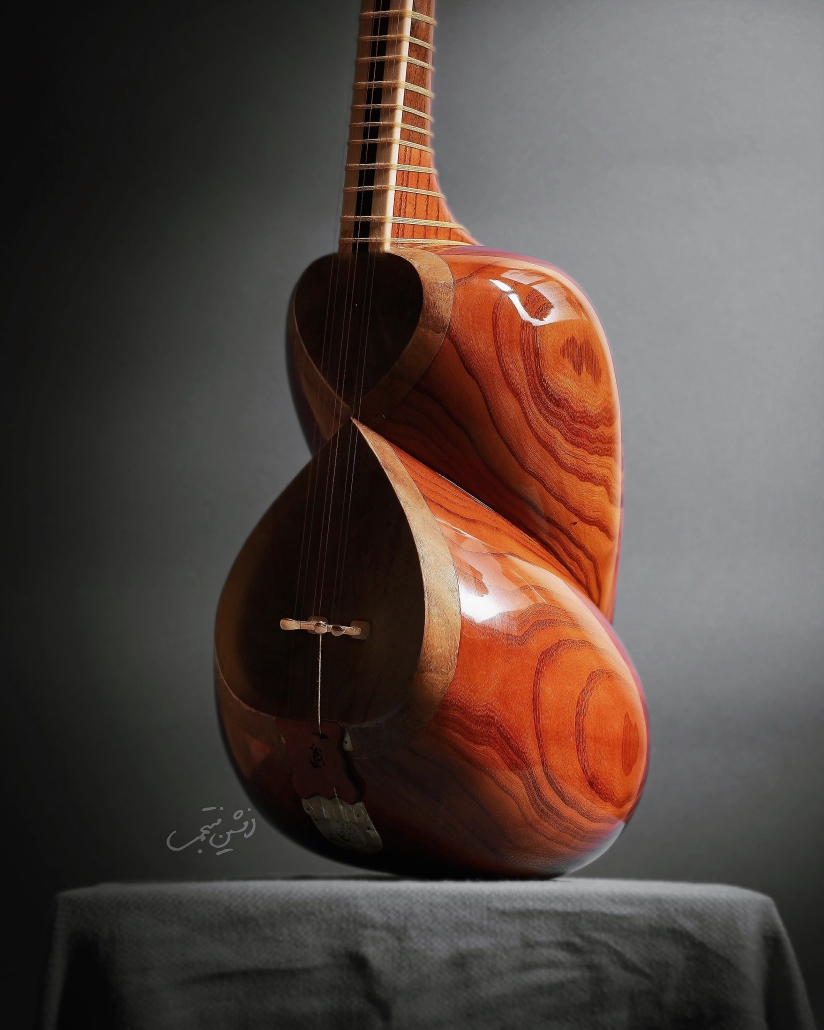
The History of the Tar: A Persian Musical Legacy
Introduction
Musical traditions from diverse cultures serve as timeless bridges, connecting generations through shared stories, melodies, and emotions. The Tar, a symbol of Persian musical heritage, epitomizes this continuity. With its origins deeply embedded in the cultural history of Persia and neighboring regions, the Tar represents a profound legacy. Its mesmerizing sound has transcended centuries, resonating across borders and weaving its way into the hearts of music enthusiasts worldwide.
In this expanded guide, we explore the Tar’s history, its evolution, cultural impact, and how it continues to inspire musicians and listeners alike. Whether you’re a historian, a musician, or simply curious, this journey into the story of the Tar promises to enrich your appreciation for this remarkable instrument.
Origins of the Tar: A Window into the Past
The word “Tar” translates to “string” in Persian, underscoring its fundamental role as a stringed instrument. Early prototypes of the Tar can be traced back thousands of years to the Persian Empire, where it was crafted as a tool for storytelling, spiritual expression, and communal bonding. Over time, its design and playing techniques evolved, leading to the sophisticated instrument we recognize today.
The Tar’s roots lie in Persia (modern-day Iran), but its influence expanded across regions such as Azerbaijan, Armenia, Georgia, and Central Asia. Its early use in courts, festivals, and spiritual gatherings cemented its role as a vital component of Persian classical music.
Evolution Through the Ages
Ancient Beginnings
The Pre-Islamic Organological Landscape
Long before the definitive crystallization of the tar in its modern iteration, the Iranian plateau hosted a rich variety of plucked chordophones. Archaeological excavations at Elamite sites reveal terracotta figurines clutching rudimentary stringed instruments dating back to the second millennium BCE. These ancient precursors possessed long necks and small resonators, establishing an early organological blueprint. The musical culture of these ancient civilizations prioritized a monophonic, highly ornamented melodic line that required instruments capable of nuanced pitch manipulation.
Sasanian Court Music and the Evolution of Long-Necked Lutes
During the Sasanian Empire, music achieved an unprecedented level of institutionalization and cultural prestige. Under the patronage of monarchs like Khosrow Parviz, legendary court musicians such as Barbad established a complex modal system. The primary vehicle for this musical renaissance was the barbat, a short-necked lute, alongside various long-necked variants. These instruments were celebrated in royal reliefs at Taq-e Bostan, where courtly ensembles are depicted performing amidst lavish royal hunts, laying the structural and theoretical foundation for future stringed innovations.
The Mystical Transition: From Barbat and Tanbur to Proto-Tar Archetypes
As the socio-political landscape of Persia transformed following the Islamic conquest, these ancient instruments underwent a process of mystical and structural sublimation. The tanbur, a long-necked lute with a pear-shaped body, became closely associated with Sufi spiritual practices, valued for its hypnotic, droning qualities. Over centuries of experimentation, luthiers sought an instrument that could merge the deep, resonant bass of the barbat with the articulate, piercing clarity of the tanbur. This hybrid experimentation catalyzed the emergence of proto-tar archetypes, characterized by an increasingly segmented soundbox.
The Golden Age of Islamic Musicology: Al-Farabi and Safi al-Din al-Urmawi
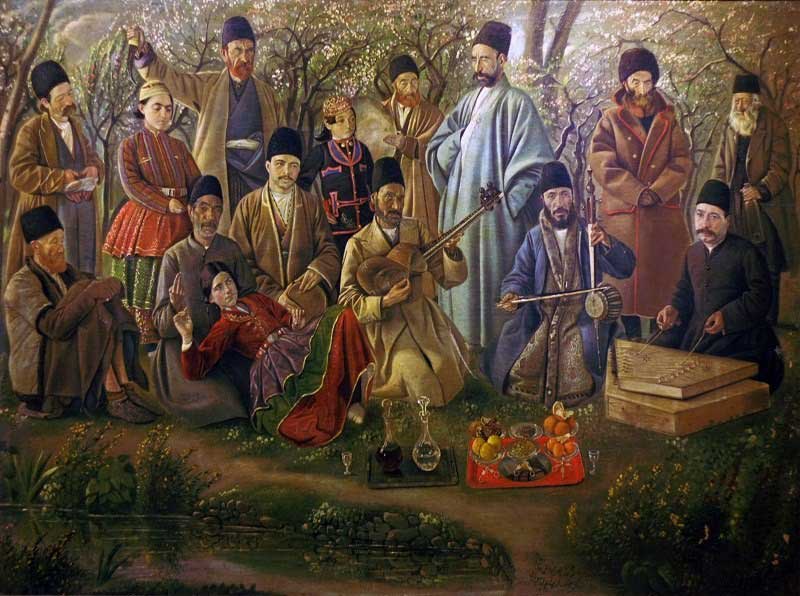
During the Safavid and Qajar dynasties (16th–20th centuries), Persian music flourished, and the Tar became a central instrument in royal courts and public performances. Musicians of this era expanded the instrument’s repertoire, solidifying its place in the dastgah system, a modal structure unique to Persian classical music.
Deciphering the Kitab al-Musiqa al-Kabir: Structural Precedents
While Al-Farabi’s writings predominantly featured the ud and the tanbur, his meticulous breakdowns of fret placement and acoustic principles provided the mathematical framework necessary for later luthiers to innovate. He analyzed the relationship between string length and the density of the soundbox wood. This theoretical rigor ensured that when the double-bowl design of the tar began to gestate, it was informed by a sophisticated understanding of acoustic wave propagation and mathematical ratios.
The Qajar Renaissance: The Golden Age of Innovation
The Modern Tar Emerges: The Structural Mastery of Farajullah and Yahya
The Qajar era marks the definitive crystallization of the tar into the precise form we recognize today. This period of intense organological refinement was driven by legendary master luthiers, most notably Farajullah and his transcendent successor, Hovanes Abkarian, universally known as Ostad Yahya. Yahya standardized the dimensions of the tar with mathematical precision, using specific ratios of mulberry wood density and skin thickness. His instruments are considered the Stradivariuses of the Persian world, possessing an unparalleled balance of tonal warmth and projection.
The Radif Framework: Designing an Instrument for Classical Microtonality
As master musicians organized the vast, scattered melodies of Persia into the structured system known as the Radif, the tar was modified to become its ultimate interpreter. The neck was lengthened and stabilized to hold 25 to 28 movable gut frets, allowing musicians to execute the koron and sori—the quarter-tone intervals unique to Middle Eastern music. The addition of a sixth string, traditionally credited to the virtuoso Gholam Hossein Darvish Khan, expanded the instrument’s range and allowed for rich, contrapuntal droning possibilities.
Under the lengthy reign of Nasser al-Din Shah, the royal court became a buzzing hive of musical virtuosity. The Shah was a passionate patron of the arts, institutionalizing music by appointing master tar players like Mirza Abdollah and Aqa Hossein-Qoli to official court positions. These masters codified the repertoire and trained a generation of musicians in an academic environment, elevating the tar from a folk instrument to the definitive vehicle for state-sanctioned high art.
Modern Adaptations
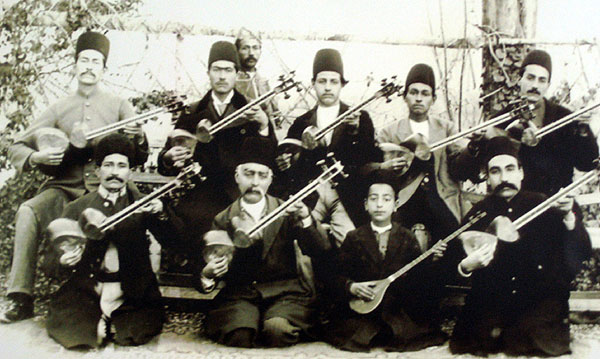
In the 19th and 20th centuries, the Tar underwent additional modifications. The introduction of metal strings, alongside advancements in tuning techniques, enhanced its versatility. By this time, the Tar was not just a traditional instrument but a symbol of Persian identity, featured in opera houses, orchestras, and even contemporary music.
UNESCO Recognition: The Tar as Intangible Cultural Heritage
In the modern era, the tar has achieved global recognition as a pinnacle of human artistic achievement. The craftsmanship and performance art of the tar were officially inscribed on the UNESCO Representative List of the Intangible Cultural Heritage of Humanity. This designation cemented its status not just as a regional artifact, but as a living monument of global cultural inheritance. Today, the tar continues to evolve, bridging ancient modal traditions with contemporary avant-garde experimentation, its double-bowl heart beating in perpetuity.
An Emblem of Harmony
As epochs have passed, the Taar has eclipsed regional demarcations, emerging as an emblem binding diverse communities and cultures within the expansive Persian territories. From the stretches of Azerbaijan to the terrains of Iran, it has become a medium echoing mutual histories, chronicles of passion, and collective ambitions. This cultural resonance underscores the imperative to safeguard and champion this incredible instrument.
Harmonizing Cultures
The age of global connectivity has paved the way for eclectic musical amalgamations. The Tar, with its signature sonority, has harmonized with instruments spanning various traditions, from the evocative sitar of India to the resonant guitar of the West. These collaborative endeavors are more than mere auditory expeditions; they signify the confluence of diverse cultures, celebrating the unifying tenor of music.
The Artistry and Precision in Crafting the Tar
The Tar’s lineage is deeply woven into the annals of ancient Persia. With the passage of time, it has witnessed transformations in its design, tonal qualities, and its role in musical arrangements. While it began its journey in the regal chambers accompanying courtly symphonies, the Taar has gracefully transitioned into folk melodies, contemporary orchestrations, and international musical alliances. Grasping this progression augments one’s admiration for the Taar’s adaptability and lasting allure.
Composition and Craft
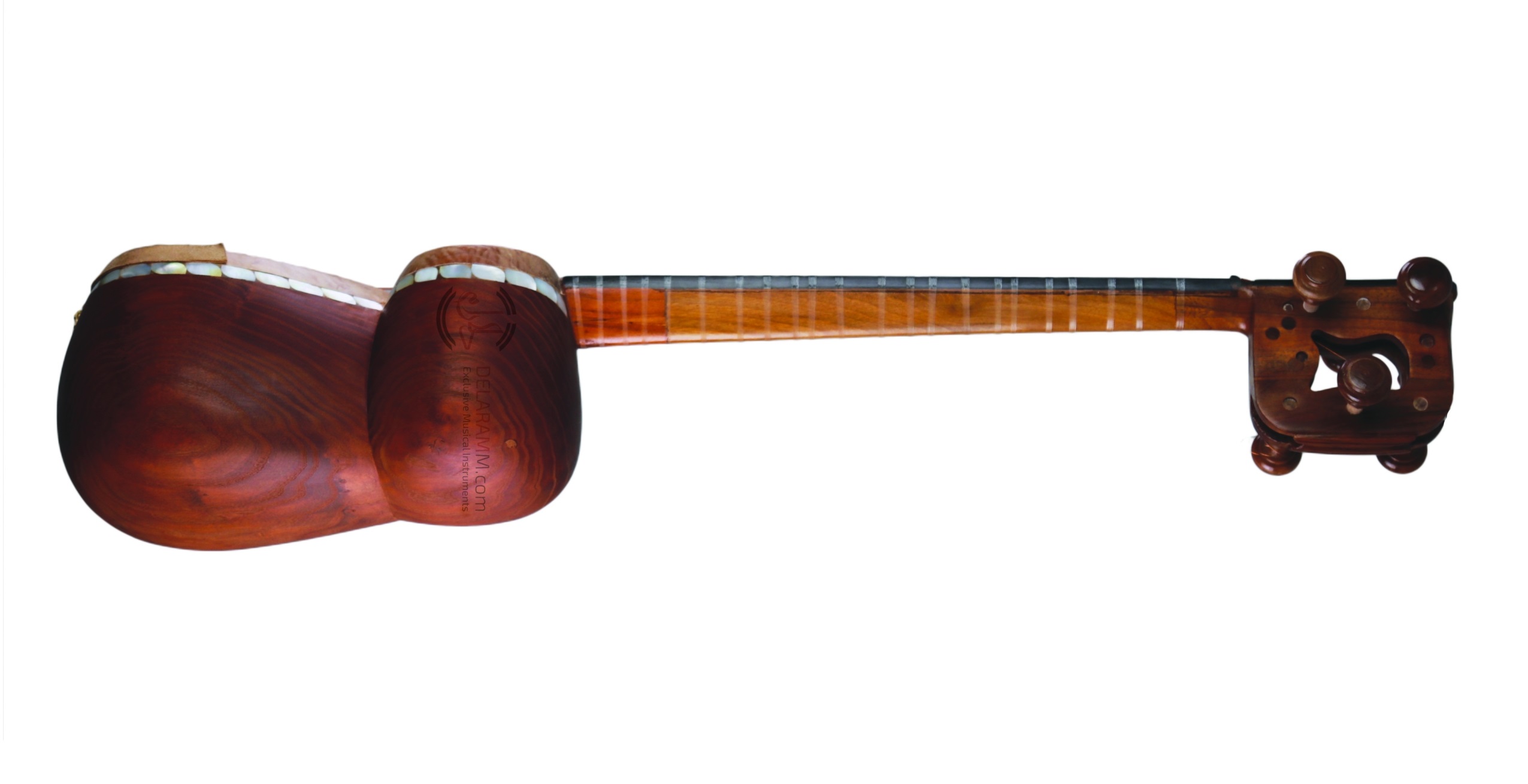
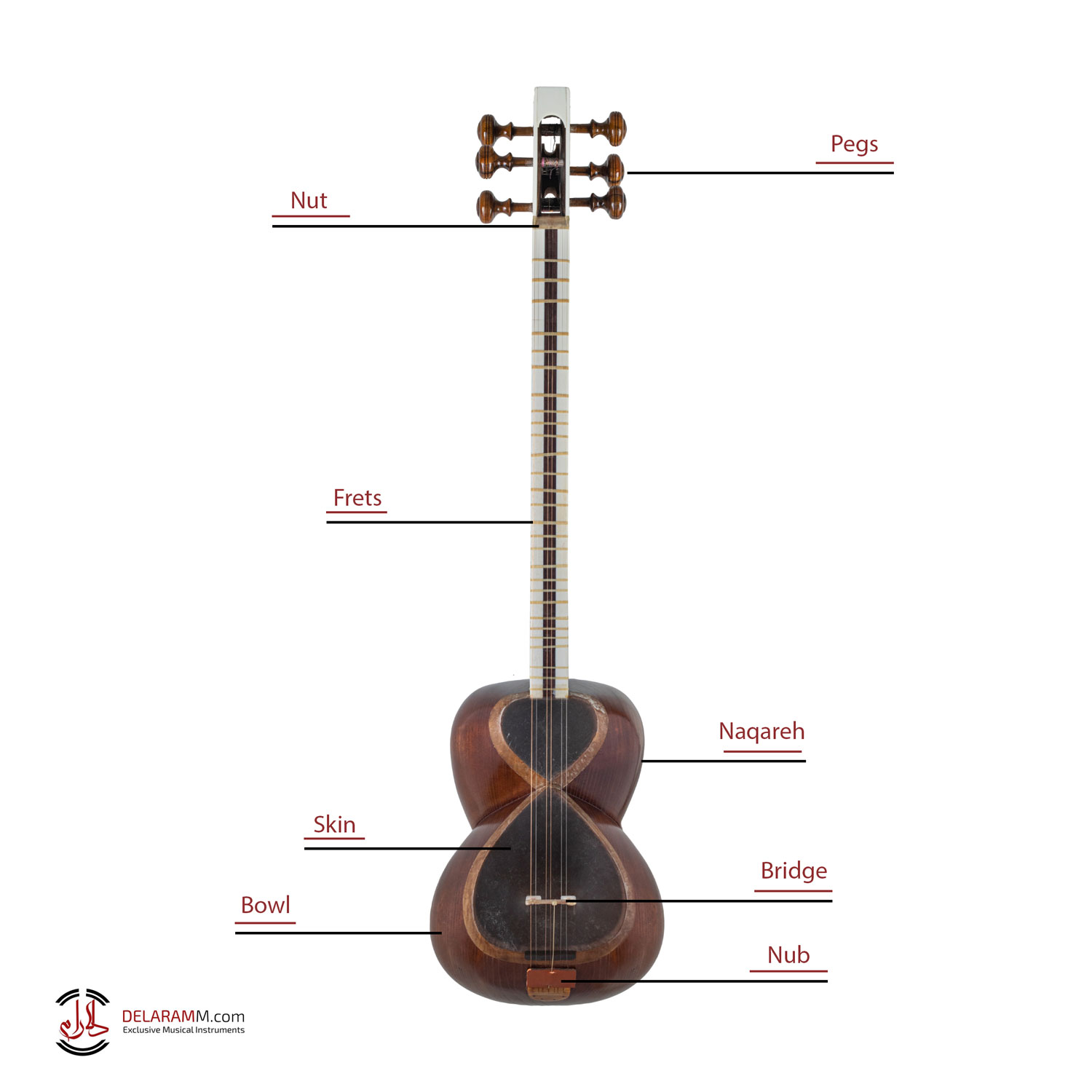
The archetypal Taar boasts a structure carved from mulberry wood, although other iterations exist. Its distinctive dual-chambered form is shaped with exceptional care to ensure impeccable acoustics. The taut covering on one segment, traditionally derived from lamb entrails, bestows upon it its characteristic sound. Furthermore, the Taar is often beautified with delicate artwork or inlays, echoing regional themes and the craftsman’s individual artistry.
| Component | Traditional Material | Acoustic / Functional Role |
| Kaseh & Naghareh | Yellow Mulberry Wood | Main resonant chambers; amplifies low and high frequencies separately. |
| Poust (Membrane) | Lamb Foetus or Fish Skin | Acts as a highly responsive soundboard; provides a bright, percussive timbre. |
| Neck (Gardan) | Aged Walnut Wood | Resists warping under high string tension; provides structural stability. |
| Inlays | Camel Bone / Ebony | Protects the edges of the neck from friction and wear. |
| Kharak (Bridge) | Khurvin Ibex Horn | Transfers string vibrations directly into the skin membrane. |
Technique and Tonality
At first glance, the Taar may appear straightforward. Yet, it necessitates a particular method to truly harness. Boasting six principal strings, often categorized into pairs, it offers an eclectic spectrum of notes. Enthusiasts frequently adjust their tuning in harmony with the maqam or dastgah they aspire to perform. The Taar’s singular methodology, which combines plucking with a sweeping motion, emanates its lively and rich sonority.
Conservation and Upkeep
Similar to its stringed counterparts, the Taar seeks consistent attention to maintain both its tonal excellence and aesthetic charm. It benefits from shelter against drastic temperature shifts, routine tuning, and periodic replacements of its covering or strings. During periods of inactivity, a cushioned enclosure, distanced from direct sunlight or dampness, is optimal. Such unwavering attention ensures Taar’s longevity, be it for an artist or a connoisseur.
Navigating Musical Landscapes with the Taar
While firmly anchored in Persian classical harmonies, the Taar’s sonic potential is boundless. Contemporary maestros have seamlessly infused their tuneful echoes into genres spanning jazz, fusion, and even chart-topping numbers. By recognizing the Taar’s versatility, one opens doors to a vast array of musical styles, amalgamating both time-honored and modern resonances. Such flexibility positions the Taar as indispensable for any sound enthusiast eager to traverse international beats.
Delaramm.com: Your Gateway to Authentic Taar Instruments
Delaramm.com champions the elegance and significance of the Tar. In doing so, we extend a handpicked ensemble of Tar instruments, with each echoing genuine artistry and finesse. Regardless of whether you’re at the outset of your Persian musical expedition or an accomplished performer, Delaramm.com addresses every need.
Offerings and Assurances:
- Varied Collection: With investment options spanning from 660 CAD to 2632 CAD, we present a Taar to suit every financial plan.
- Simplified Acquisitions: Our intuitive digital portal ensures that procuring a Tar is straightforward. Merely pinpoint your instrument of choice, shift it to your digital basket, and finalize through our fortified payment pathways.
- Genuine Commitment: Each Taar under our purview originates from adept artisans, guaranteeing you receive a masterpiece in both auditory and visual dimensions.
Why Entrust Delaramm.com?
- Expert Guidance: Their team is dedicated to helping you find the perfect Tar.
- Secure Transactions: Shop confidently with their robust payment system.
- Worldwide Shipping: No matter where you are, your Tar will arrive safely.
Conclusion
The Taar transcends its identity as a mere musical tool. It encapsulates timeless melodies, narratives unfolding with each chord, and an echoing past. At Delaramm.com, we extend an invitation to embark on this harmonious voyage. Immerse yourself in Persian symphonies, establish ties with age-old customs, and become a custodian of a legacy. With a Taar instrument awaiting on our platform, your sonic dreams are within arm’s reach. Opt for Delaramm.com, where tradition gracefully intertwines with authenticity.
FAQs on the History of the Tar
1. How old is the Persian Tar?
The Persian Tar dates back to the 18th century, with its origins likely extending earlier. It became more refined during the Safavid era (1501–1736) and has since evolved into a central instrument in Persian classical music.
2. What does “Tar” mean in Persian?
In Persian, “Tar” means “string,” referring to the instrument’s defining feature—its strings that produce sound.
3. What country is the Tar from?
The Tar originates from Persia, now modern-day Iran. It is a core part of Persian musical heritage, though it has influenced music in neighboring regions like Azerbaijan and Armenia