
Are Arabic and Iranian music the same?
The musical traditions of Iran and the Arabic-speaking world are among the oldest living musical cultures on Earth. For centuries, these neighboring civilizations exchanged ideas through trade, migration, scholarship, and political interaction, shaping one another’s artistic development. Although Persian and Arabic music share certain characteristics—such as modal systems, improvisation, and microtonal melodies—they remain distinct traditions with their own theoretical foundations, instruments, performance practices, and cultural identities.
This article explores the major similarities and differences between Iranian and Arabic music.
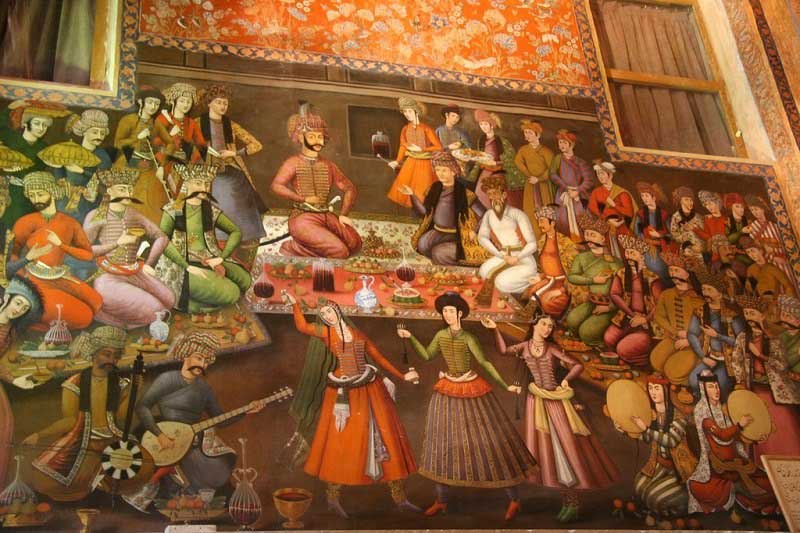
Arabic and Iranian music: Musical scales, modes and rhythmic structures
| Persian | Arabic |
|---|---|
| Dastgah | Maqam |
| Radif | Maqam repertoire |
| Gusheh | Sayr (melodic pathway) |
| Avaz | Taqsim (improvisation) |
Musical Modes, Scales, and Rhythmic Organization
One of the most significant differences between Persian and Arabic music lies in their modal systems.
Persian classical music is built upon the Dastgah system, a collection of modal frameworks that guide both composition and improvisation. Each Dastgah consists of numerous short melodic models known as Gushehs, which are preserved within the Radif—the canonical repertoire of Persian classical music. Rather than serving as fixed compositions, Gushehs provide musicians with melodic material that they develop creatively during performance.
Arabic classical music is organized around the Maqam system. Like the Dastgah system, each Maqam possesses its own characteristic intervals, melodic movement, emotional atmosphere, and performance conventions. A performer may remain within a single Maqam or transition to related Maqamat during an extended performance.
Although both traditions are modal rather than harmonic, their melodic vocabulary and modal organization differ considerably. Persian music often emphasizes gradual melodic development and subtle ornamentation, while Arabic music frequently explores broader modal modulation and distinctive melodic pathways.
Both traditions also make extensive use of microtonal intervals—pitches that fall between the notes of the Western twelve-tone system. In Arabic music, these intervals are often represented as quarter tones in modern notation, although their exact tuning varies depending on region and performance practice. Persian music likewise employs microtonal pitches, commonly indicated by the accidentals Koron (quarter-flat) and Sori (quarter-sharp), whose precise intonation depends on the musical context rather than fixed mathematical divisions.
Rhythm also differs between the two traditions.
Arabic music relies heavily on Iqa’at, a sophisticated system of rhythmic cycles ranging from simple patterns to highly intricate meters. These rhythmic frameworks provide structure for compositions while allowing performers considerable expressive freedom.
Persian classical music approaches rhythm differently. Many performances alternate between Avaz, which is performed in free rhythm, and metered compositions such as Pishdaramad, Chaharmezrab, Tasnif, and Reng. Rather than relying on an extensive system of recurring rhythmic cycles like the Arabic Iqa’at, Persian classical music often places greater emphasis on the natural flow of melody and poetic expression.
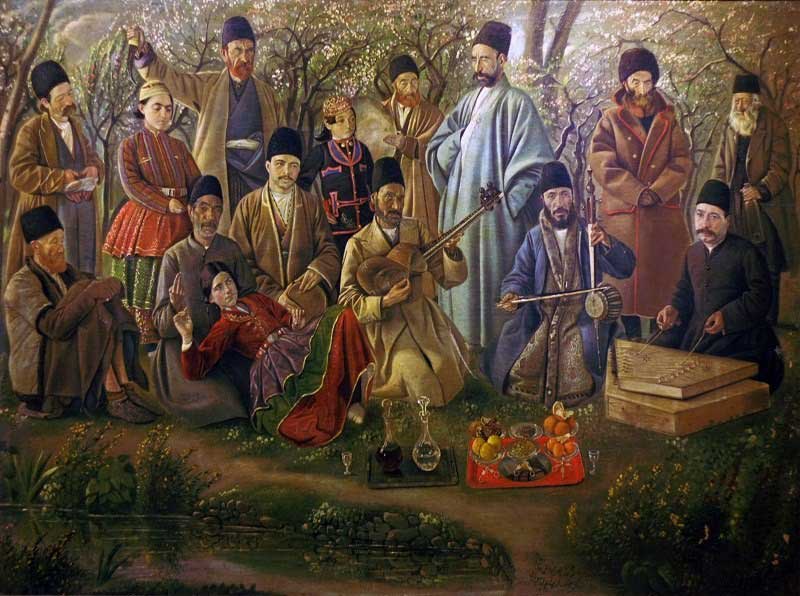
Similarities Between the Two Traditions
Despite their theoretical differences, Persian and Arabic music share several important characteristics.
Modal Improvisation
Improvisation occupies a central place in both traditions. Persian musicians improvise within the framework of a Dastgah using the melodic vocabulary of the Radif, while Arabic musicians perform Taqsim, an improvised exploration of a Maqam. In both cases, performers combine technical mastery with personal creativity.
Microtonal Expression
Neither tradition is confined to the twelve equal semitones of Western music. Subtle microtonal inflections contribute greatly to the emotional depth and expressive character of both Persian and Arabic performances.
Ornamentation
Grace notes, slides, trills, vibrato, and delicate melodic embellishments are essential features of both musical cultures. These ornaments give performances their expressive nuance and individual character.
Instruments and Sound
Instrumentation represents another important distinction between Persian and Arabic music.
Persian classical music commonly features instruments such as the Tar, Setar, Santur, Kamancheh, Ney, and Tombak. Together, these instruments create an intimate and highly expressive ensemble sound characterized by subtle melodic ornamentation and refined tonal colors.
Arabic music traditionally employs instruments such as the Oud, Qanun, Ney, Riqq, and Darbuka. These instruments produce rich, resonant textures that support both solo improvisation and ensemble performance.
While the Persian Tar and the Arabic Oud serve similar musical roles as principal melodic instruments, they differ significantly in construction, playing technique, and tonal character. Likewise, the Persian Barbat, an ancient lute that predates the modern Oud, illustrates the historical connections between the two musical cultures.
Some instruments are shared by both traditions.
Daf
The Daf, a large frame drum, appears throughout Iran and many Arabic-speaking regions. In Iran, it is particularly associated with Kurdish and Sufi musical traditions, while throughout the Arab world it is widely used in folk, devotional, and classical music.
Ney
The Ney, an end-blown reed flute, has been played across the Middle East for thousands of years. Although construction methods and performance styles vary between regions, its breathy and deeply expressive tone makes it one of the defining instruments of both Persian and Arabic music.
Arabic and Iranian music: Cultural, historical and social context
The close relationship between Persian and Arabic music reflects centuries of cultural exchange.
Following the rise of the early Islamic empires, musicians, scholars, and instrument makers traveled widely across the Middle East, transmitting musical knowledge between Persian, Arab, Turkish, Byzantine, and Central Asian cultures. Many influential medieval music theorists worked within multilingual and multicultural societies where artistic ideas circulated freely.
Persian classical music remains deeply connected to Persian poetry, philosophy, and literary traditions. The works of poets such as Hafez, Rumi, and Saadi continue to inspire vocal and instrumental performances.
Arabic music reflects the remarkable diversity of the Arab world itself. Regional traditions from the Levant, Egypt, Iraq, the Arabian Peninsula, and North Africa have each contributed distinctive styles while also incorporating influences from Andalusian, Ottoman Turkish, Persian, African, and local musical traditions.
Rather than developing in isolation, both Persian and Arabic music have evolved through continuous interaction with neighboring cultures while preserving their own unique artistic identities.
Conclusion
Persian and Arabic music are closely related yet distinctly different musical traditions. Both are rooted in modal systems, rely heavily on improvisation, and make extensive use of microtonal intervals to achieve expressive depth. At the same time, they differ in their theoretical organization, rhythmic approaches, instrumental traditions, and cultural influences.
Understanding these similarities and differences not only highlights the richness of each tradition but also reveals the long history of cultural exchange that has shaped the musical landscape of the Middle East. Today, Persian and Arabic music continue to evolve, inspiring musicians around the world while preserving artistic traditions that have endured for centuries.