
Persian Santoor vs. Indian Santoor: A Comparative Guide

The santoor, an ancient string instrument, holds a revered place in world music. Its rich resonance and unique playing technique have charmed musicians for centuries. While the Persian and Indian versions share common ancestry, their distinctions are profound and fascinating. This article delves into the historical, structural, and musical differences between the Persian santoor and Indian santoor, offering insights for enthusiasts, musicians, and instrument collectors.
Historical Background
The santoor has roots tracing back to ancient Mesopotamia, where its predecessors appeared as hammered dulcimers. Over time, the instrument found its way into diverse cultures, evolving into regionally distinct forms.
- Persian Santoor: The Persian santoor has a long-standing history in the Dastgah system of classical Persian music, a modal framework used for composition and improvisation. It is often mentioned in Persian poetry and manuscripts, symbolizing both spirituality and artistic expression.
- Indian Santoor: The Indian santoor became prominent in the Kashmir Valley, where it was adapted to complement Hindustani classical music. While initially used in folk music, it gained global recognition through the efforts of maestros like Pandit Shivkumar Sharma.
Design and Structure
Dimensions and Shape
| Feature | Persian Santoor | Indian Santoor |
|---|---|---|
| Shape | Compact, trapezoidal frame | Larger trapezoidal frame |
| Size | Smaller and lighter | Larger and heavier |
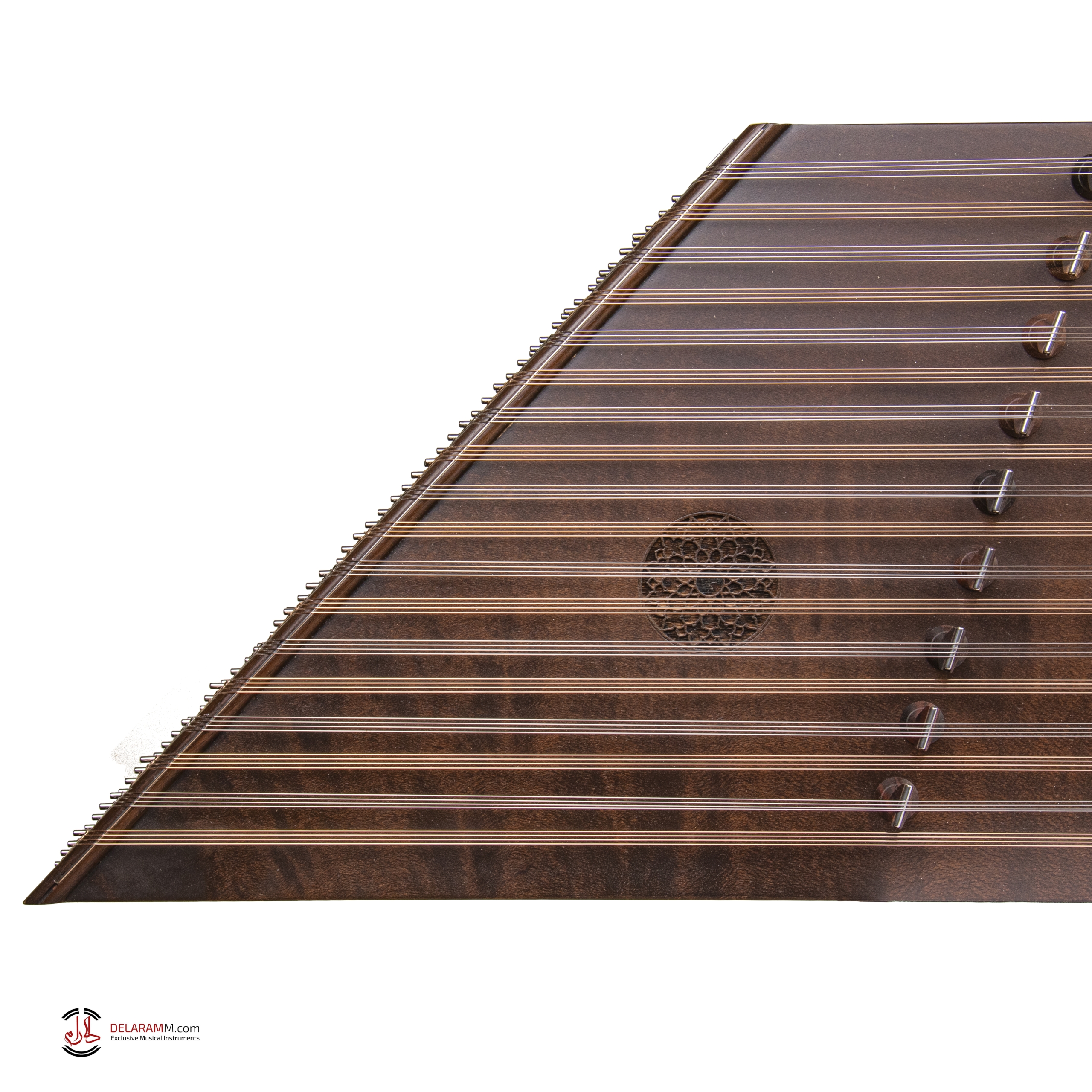
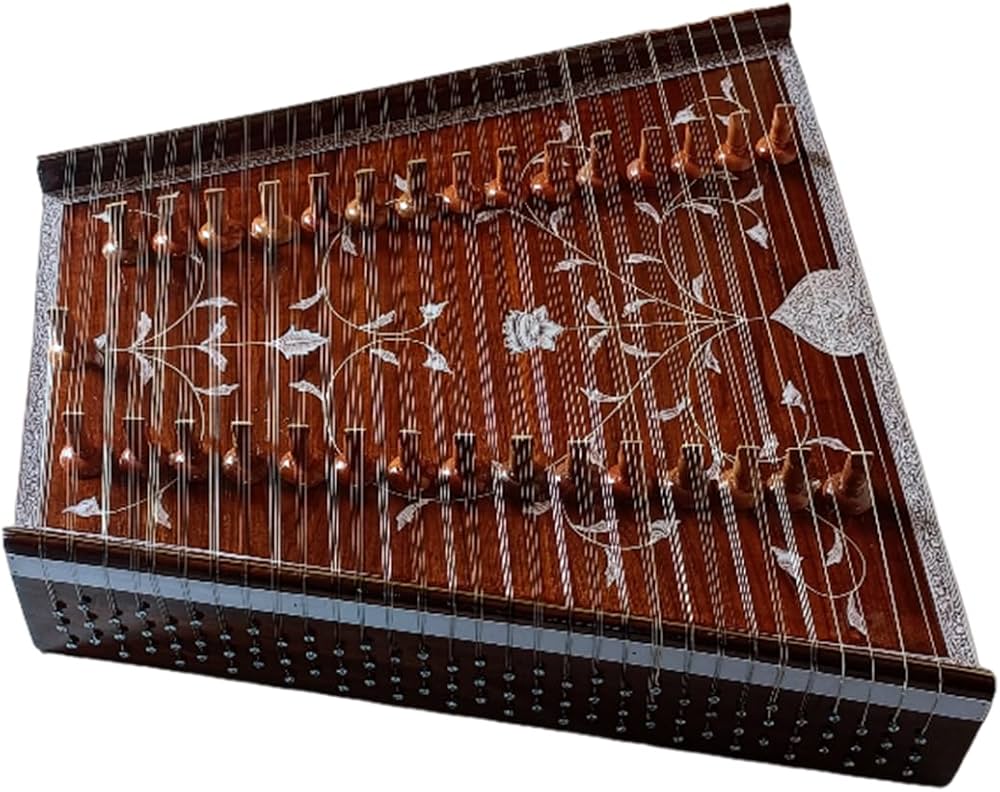
The Persian santoor is compact, making it easier to handle and transport. Conversely, the Indian santoor’s larger size accommodates additional strings, enhancing its tonal range.
Materials Used
| Component | Persian Santoor | Indian Santoor |
|---|---|---|
| Body Wood | Walnut or rosewood | Walnut (preferred for tonal richness) |
| Strings | Steel and brass | Brass, steel, or copper |
| Mallets | Lightweight wood (e.g., walnut) | Heavier wood for greater dynamic range |
The choice of materials significantly impacts the instrument’s sound and durability. Persian santoors emphasize a soft, resonant tone, while Indian santoors are built for brighter, dynamic performances.
Playing Techniques
The techniques for playing the santoor vary widely between Persian and Indian traditions, reflecting the stylistic differences in their respective musical cultures.
- Persian Santoor:
Played using lightweight mallets called Mezrabs, the Persian santoor emphasizes smooth, flowing melodies. Techniques like Rizab, a soft gliding motion, create its signature tranquil sound. - Indian Santoor:
The Indian santoor is played with heavier mallets, allowing for dynamic rhythmic patterns and fast-paced melodic runs (taans). Techniques like Meend (gliding between notes) and Gamaka (ornamental variations) add depth to its performance.
String and Tuning Systems
String Configuration
| Aspect | Persian Santoor | Indian Santoor |
|---|---|---|
| Number of Strings | 72 strings, arranged in 4-string groups | 100+ strings, arranged in 3-string groups |
| Bridges | 9 movable bridges | 25+ movable bridges |
One of the most noticeable distinctions lies in string count.
A traditional Persian Santoor commonly features approximately 72 strings arranged in groups across multiple bridges.
An Indian Santoor often contains around 90 to 100 strings, depending on the maker and model.
The greater number of strings allows the Indian Santoor to accommodate the extensive requirements of raga performance.
Tuning and Scales
| Aspect | Persian Santoor | Indian Santoor |
|---|---|---|
| Tuning System | Based on Persian Dastgahs | Based on Indian Ragas |
| Range | Moderate tonal range | Wide tonal range |
Tuning represents one of the greatest distinctions between the two instruments.
The Persian Santoor is typically tuned according to the requirements of Persian dastgah and avaz systems. Musicians frequently adjust tunings to suit specific modes and compositions.
The Indian Santoor is tuned to accommodate the needs of raga performance, often emphasizing drone notes, tonal centers, and melodic flexibility.
Each tuning system reflects the theoretical foundations of its musical tradition.
Bridge Configuration and Layout
Bridge placement plays a crucial role in determining pitch organization.
The Persian Santoor commonly utilizes two rows of bridges that facilitate the execution of Persian modal systems. Each bridge contributes to a carefully structured arrangement of notes.
The Indian Santoor employs a modified bridge system designed to support the broader melodic demands of Hindustani music.
As a result, the note layout and playing approach differ substantially.
The Santour in Today’s Era
Both versions of the santoor have transcended their traditional boundaries, finding a place in global music genres.
- Persian Santoor:
The Persian santoor is now used in world music and experimental compositions, blending its melodic charm with jazz, electronic, and fusion styles. - Indian Santoor:
The Indian santoor has been integrated into pop, rock, and film music. Artists worldwide use its bright tone to add a unique texture to modern compositions.
Choosing Between Persian and Indian Santoor
When deciding between the two, consider these factors:
- Musical Style: If you’re inclined toward Persian classical or meditative music, the Persian santoor is ideal. For Indian classical enthusiasts or those seeking versatility, the Indian santoor is a better choice.
- Size and Portability: The Persian santoor is smaller and more portable, while the Indian santoor’s larger frame offers extended range but less convenience.
- Learning Curve: The Persian santoor may be simpler to start with due to fewer strings, whereas mastering the Indian santoor requires advanced skills.
Acquiring a Santour via Delaramm.com
For those magnetized by the santour’s charm and with a desire to own one, Delaramm.com extends a handpicked collection of superior instruments. As a reliable online portal for melody enthusiasts, our platform guarantees that each santour embodies precision, delivering the authentic resonance that admirers yearn for.
Navigating our portal is intuitive. Merely access the “Instruments” niche, and there lies a dedicated enclave for the santour. Here, interested parties can sift through diverse variants, absorb detailed elucidations, and even immerse in videos exemplifying the instrument’s sonic caliber.
What differentiates Delaramm.com is our unwavering pledge to genuineness. Every santoor on offer has weathered stringent quality assessments, ensuring it radiates not just aesthetic allure but also the authentic, melodious cadences inherent to the instrument.
Furthermore, armed with our safeguarded online transaction methods and steadfast delivery modality, procuring a santoor becomes a breeze. And for those in quest of guidance or with queries, our committed client support brigade stands vigilant, primed to facilitate and guarantee an unblemished acquisition journey.
Maintenance and Care Tips
Proper maintenance is essential to preserve the santoor’s beauty and sound quality:
- Climate Control: Avoid exposing the instrument to extreme humidity or temperature changes to prevent warping.
- Regular Cleaning: Clean the strings and body with a soft cloth to remove dust and maintain shine.
- Tuning: Regularly check the tuning to ensure tonal accuracy. Use a chromatic tuner for precise adjustments.
- Storage: Keep the santoor in a padded case to protect it from physical damage and environmental factors.
- Professional Servicing: Periodically consult a professional for string replacement and other maintenance needs
Conclusion
The Persian and Indian santoor are both masterpieces of musical craftsmanship, each reflecting the culture and history of its region. While the Persian santoor is celebrated for its calming, meditative sound, the Indian santoor captivates with its versatility and intricate melodies.
Whether you are a musician, collector, or music enthusiast, understanding these differences can deepen your appreciation for these instruments. Platforms like Delaramm.com offer high-quality santoors tailored to your needs, ensuring you can embark on your musical journey with an instrument that resonates with your spirit.
Embrace the timeless charm of the santoor, and let its strings tell stories that bridge cultures and generations.
Frequently Asked Questions
No. While they share common ancestry, they differ in construction, tuning, repertoire, and playing style.
The Indian Santoor generally has more strings than the Persian Santoor.
Difficulty depends on the student’s musical background and goals. Both require dedication and practice.
Some adaptations are possible, but the instruments are optimized for different musical systems.
The Persian Santoor is often perceived as brighter and more articulate, while the Indian Santoor tends to produce a fuller and more resonant tone.