
Persian Ney (Iranian Reed Flute): History, Anatomy & Playing Techniques
The Persian ney (also spelled nay) is one of the oldest wind instruments still played today — a simple reed flute whose breathy, haunting sound has been part of Iranian music for thousands of years. Known in Persian as “ney” (نی), this end-blown instrument holds a unique place among Persian musical instruments, bridging ancient Mesopotamian traditions and the classical music of modern Iran. In this article, we trace the history of the Persian ney: where it came from, how it is made, how it is played, and why its melancholic voice still captivates listeners around the world.
Whether you are a music enthusiast, a student of history, or a curious learner, join us as we unravel the story behind this timeless instrument.
The Origin of the Ney: How Old Is This Instrument?
The ney is widely regarded as one of the oldest known musical instruments in the world. Its story begins in the ancient Near East, where archaeological finds and artwork point to reed flutes played many thousands of years ago.
- Mesopotamian beginnings: Sumerian carvings and Babylonian artifacts from several millennia BCE show musicians holding end-blown reed instruments — the earliest recognizable ancestors of today’s ney. These instruments carried symbolic meanings associated with spirituality and the human soul.
- Egyptian connections: Wall paintings inside the Great Pyramids of Giza depict figures playing reed flutes in religious and ceremonial settings.
- The name itself: The word “ney” traces back to the ancient Sumerian “na,” meaning reed — a reminder that this instrument has always been made from a simple piece of river cane.
Pinpointing an exact birthdate is difficult, since early flutes were made of organic material that rarely survives. But between the written records, carvings, and paintings that do survive, most historians agree the ney’s lineage stretches back thousands of years — making it not just an Iranian instrument, but a shared heritage of the entire ancient Near East.
The Ney in Persian Culture
As civilizations flourished, the ney found a special place in Persian cultural and spiritual life. Over time, it evolved from a simple reed flute into an instrument capable of expressing a wide range of emotions, from profound sorrow to ecstatic joy. Its sound became synonymous with the mystical traditions of Persia, paving the way for its later association with Sufism.
The Persian Ney in Antiquity
Mentions in Early Persian History
Historical texts from the Sasanian Dynasty (224–651 CE) provide concrete evidence of the ney’s importance in early Persian society. During this period, music was celebrated in royal courts and public festivities, and the ney was among the instruments that set the musical tone.
- Cultural documentation: Writings from the Sasanian era highlight the ney not merely as a folk instrument but as a symbol of refined cultural expression — a musical voice that conveyed the emotional depth of Persian art.
- Artistic representations: Later visual evidence from the Safavid era (1501–1736 CE) reinforces the ney’s continued relevance. Paintings and miniatures from this period depict musicians in royal settings, where the ney appears alongside other classical Persian instruments, bridging ancient traditions with more modern expressions.
Evolution Through the Ages
From Shepherds’ Flutes to Royal Courts
The ney’s journey is one of continuous transformation. Originally a humble reed instrument used by shepherds, it gradually found its way into the sophisticated courts of Persia. Its evolution mirrors the cultural shifts in the region, adapting to changes in musical styles and societal values.
- Pre-Islamic and early Islamic eras: The instrument’s early use in Persian courts set the foundation for its later evolution. With the advent of Islam, musical traditions underwent significant changes; yet the ney persisted as a beloved medium for both secular and sacred music.
- The Islamic Golden Age: During this period, great scholars and musicians documented the ney’s techniques and scales. Influential figures such as Farabi and Avicenna recognized the instrument’s unique acoustic properties, contributing to its theoretical development.
Revolutionary Innovations in Ney Playing
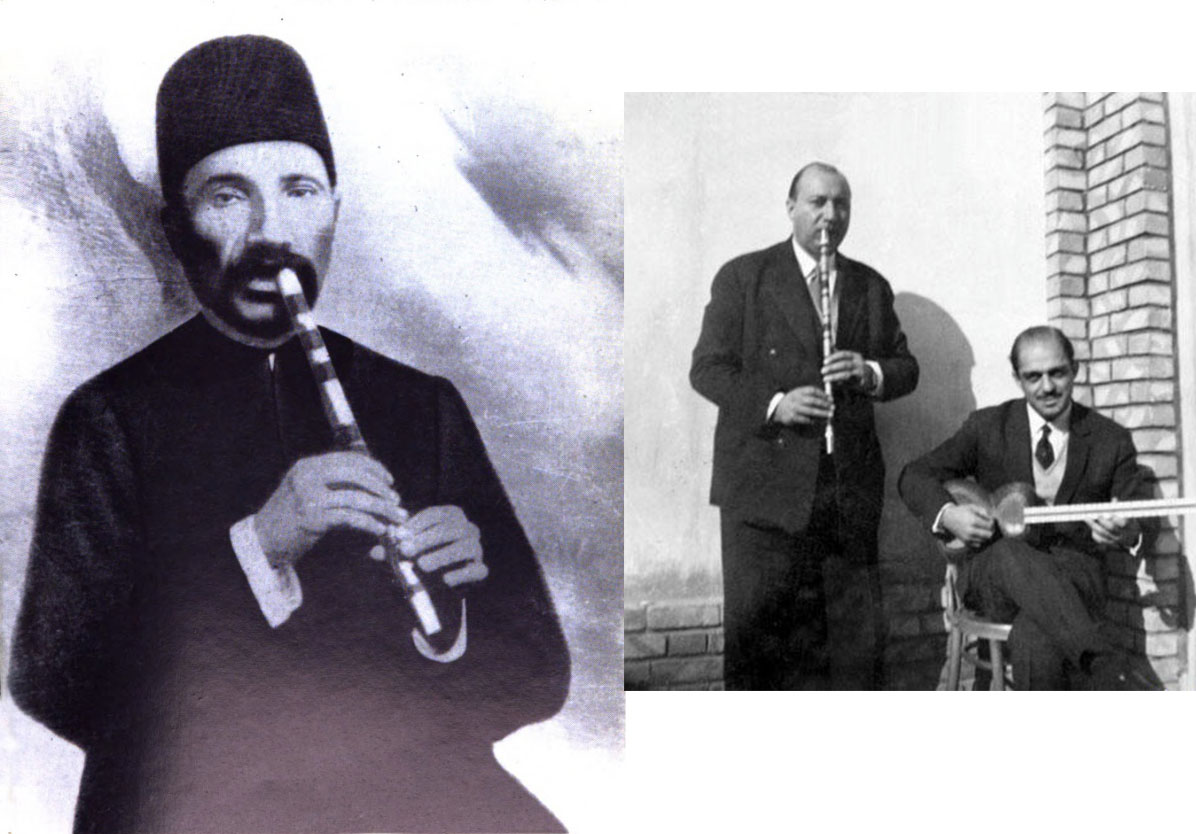
A pivotal moment in the history of the Persian Ney came with the emergence of Nayeb Asadullah (c. 1852–c. 1925). Often called the “father of the modern Persian ney,” Asadullah introduced the interdental embouchure — a technique that transformed the instrument’s sound. Unlike its Arabic and Turkish cousins, which are traditionally played with an oblique embouchure, the modern Persian ney is played by placing the rim between the front teeth. This innovation not only provided a broader dynamic range but also allowed for subtle microtonal variations, essential for the intricate modal system (Dastgah) of Persian classical music.
Later, virtuosos like Hassan Kassai (1928–2012) further refined these techniques. Kassai’s groundbreaking work in articulation, rhythm, and tone expanded the expressive possibilities of the ney, securing its place as a central instrument in Persian music.
Anatomy and Craftsmanship of the Persian Ney
Meticulous Construction from Natural Materials
Crafting a Persian ney is a time-honored art that combines natural selection with precise craftsmanship. Traditionally made from Arundo donax (giant reed), the ney is carefully selected for its ideal thickness, length, and uniform internal structure.
Key components:
- Reed material: The instrument is crafted from a single piece of reed, chosen for its acoustic properties.
- Segments and nodes: The reed is divided naturally by nodes. Typically, the ney consists of seven segments, with the six nodes dictating the placement of finger holes.
- Finger holes: A typical Persian ney features five holes on the front and one thumb hole on the back, allowing for the production of microtones essential in Persian music.
- Mouthpiece (“sari”): Unlike Western flutes, the ney’s mouthpiece is a simple extension — often made from plastic or metal — that protects the reed and aids in sound production.
- Protective sheath (“toq”): The far end of the ney is often fitted with a metal sheath to prevent damage to the reed.
The Unique Interdental Embouchure
A defining feature of the Persian ney is its interdental embouchure. This technique involves placing the edge of the instrument between the upper front teeth and using precise tongue and lip movements to control airflow. This method allows players to:
- Produce subtle microtonal shifts.
- Achieve a wide dynamic range — from soft, introspective tones to powerful, resonant sounds.
- Impart an emotional depth that mirrors the human voice, which is why the ney is often described as “soulful.”
The Art of the Neyzen: Mastering the Persian Ney
Playing the ney is both a technical and emotional journey. The delicate balance of breath control, finger dexterity, and embouchure adjustment demands years of practice.
- Breath control: Mastery of diaphragmatic breathing is essential to produce a steady, controlled tone.
- Finger coordination: The precise covering and uncovering of the six holes allows for the production of various pitches and microtones. Players often practice the scales and Radif — the traditional repertoire of Persian classical music — to refine their skills.
- Articulation and ornamentation: Techniques such as vibrato, glissando, and microtonal bending enable the ney to express the nuanced emotional themes of Persian classical music.
The Ney in Sufi Mysticism
In Sufi tradition, the ney is far more than an instrument — it is a spiritual symbol. Sufi mystics regard the ney as an echo of the human soul’s lament for divine union. During Sama ceremonies, where whirling dervishes perform their meditative dance, the ney’s mournful tones create an atmosphere of transcendence and introspection. The poetic imagery in Rumi’s works often draws on the ney as a metaphor for separation and longing, cementing its role as a vehicle for spiritual expression.
The Persian Ney and Its Middle Eastern Relatives
The Persian ney belongs to a large family of end-blown reed flutes played across the Middle East. The Arabic ney and the Turkish ney share the same ancient ancestor, but centuries of separate development have given each a distinct sound, technique, and even construction. Understanding these differences explains why the Persian ney sounds so unlike its cousins — and why players of one tradition cannot simply switch to another without relearning the instrument.
| Feature | Persian Ney | Arabic Ney | Turkish Ney |
|---|---|---|---|
| Finger holes | 6 (5 front, 1 back) | 7 (6 front, 1 back) | 7 (6 front, 1 back) |
| Mouthpiece | Simple mouth extension (“sari”) often present | Typically none | Often a “başpare” of horn, plastic, or brass |
| Primary embouchure | Interdental (between front teeth) | Rim placed against the lips | Mouth placed over the “başpare” |
| General sound | Soulful, haunting, mystical | Softer, more intimate | Sharper, more stable |
| Typical length | 40–80 cm | Varies by pitch | 55–90 cm |
In short: if you hear a ney that sounds breathy, vocal, and slightly mournful — with the player seeming to “speak” through the instrument — you are most likely hearing the Persian style. The interdental embouchure described earlier is the single feature that sets the Persian ney apart from every other reed flute in the region.
Pioneers and Virtuosos of the Persian Ney
The legacy of the Persian ney has been enriched by a lineage of master players whose innovations have shaped its modern identity.
- Nayeb Asadullah: Often credited with introducing the interdental embouchure, his pioneering work laid the foundation for the modern Persian ney. His innovations elevated the instrument from a rustic shepherd’s flute to a refined instrument capable of complex expression.
- Hassan Kassai: Regarded as one of the greatest ney players of the 20th century, Kassai’s virtuosity and technical prowess expanded the expressive range of the ney. His recordings and live performances continue to inspire both traditional and contemporary musicians.
- Other notable figures: Jamshid Andalibi, Abdolnaghi Afsharnia, and contemporary artists like Siamak Jahangiry have also contributed significantly to the evolution of ney playing, ensuring that this ancient art form remains vibrant in modern Iranian music.
The Ney Among Iranian Musical Instruments
Persian classical music rests on a family of instruments, each with its own voice — and the ney is often called its most vocal member. In a traditional Iranian ensemble you will typically find:
- Tar — a long-necked lute with a double-bowl body, the melodic backbone of many ensembles (see our Persian tar buying guide).
- Setar — a smaller, more intimate four-stringed lute favored for solo performance (setar vs. saz comparison).
- Kamancheh — a spiked fiddle played upright, with a piercing, singing tone (kamancheh maintenance guide).
- Santur — a hammered dulcimer whose shimmering strings contrast with the ney’s breathiness (Persian santoor buyer’s guide).
- Tonbak — the goblet drum that anchors the rhythm (tonbak buying guide).
Among these, the ney plays a special role: it is the instrument closest to the human voice. While the tar and santur articulate precise notes, the ney glides between them — bending pitches, breathing, sighing — which is why Persian musicians have long treated it as the “singer” of the instrumental family. In Radif performance, the ney’s sustained notes and subtle ornaments carry the emotional weight of each dastgah.
If you are drawn to Iran’s wind instruments, the ney even has a rustic cousin: the ney-anban, Iran’s traditional bagpipe.
The Enduring Melody: Modern Influence and Global Recognition
Persian Ney in Contemporary Iranian Music
Today, the Persian ney remains a cornerstone of Iranian classical music, performing in both intimate gatherings and grand concert halls.
- Classical ensembles: The ney is featured prominently in Radif performances, where its delicate tones complement instruments like the tar, setar, and kamancheh.
- Fusion and world music: Modern musicians increasingly incorporate the ney into fusion genres — melding traditional Persian melodies with jazz, electronic, and ambient music. This cross-cultural exchange has introduced the ney to a global audience.
Global Impact and Cultural Exchange
The universal appeal of the ney has led to collaborations between Iranian musicians and artists from around the world.
- Workshops and masterclasses: Organizations worldwide now offer workshops on Persian music, allowing aspiring musicians to learn the unique techniques of ney playing.
- Online communities: Digital platforms have enabled a global community of ney enthusiasts to share recordings, tutorials, and performance tips, ensuring the instrument’s legacy continues to thrive.
Frequently Asked Questions About the Ney
A: “Ney” (نی in Persian and Arabic script) simply means “reed” — the hollow river cane the instrument is made from. The word comes from the ancient Sumerian “na.” The instrument is named after its raw material.
A: Yes — they are two spellings of the same word, reflecting different ways of rendering the Persian/Arabic sound in the Latin alphabet. “Ney,” “nay,” and “nai” all refer to the same reed flute.
A: The ney is an end-blown reed flute played across the Middle East and Central Asia. In Iran it is a central instrument of Persian classical music, famous for its soft, breathy, and deeply expressive tone.
A: The ney has a reputation for being one of the more challenging wind instruments to start with, mainly because producing a steady tone takes practice. Most teachers suggest regular daily breath exercises for the first few months.
Conclusion
The Persian ney is more than an ancient instrument — it is a soulful voice echoing through millennia, a bridge between the tangible and the divine. From its humble beginnings in the ancient lands of Mesopotamia and Egypt to its revered status in the courts and spiritual circles of Persia, the ney embodies the evolution of Persian musical heritage.