
How to Tune a Setar: A Comprehensive Guide
The setar is one of the stringed and mezrabi instruments of Iranian music, which is played with the nails of the index finger or plectrum. Contrary to its name that means the 3-stringed instrument, setar consists of four strings. The setar is a native Iranian instrument, and many music schools teach their students how to play it. In order to be able to play a beautiful song with an instrument, it is necessary to tune it well. One of the issues about this instrument is its tuning. In this article, the setar tuning and its related points are explained.
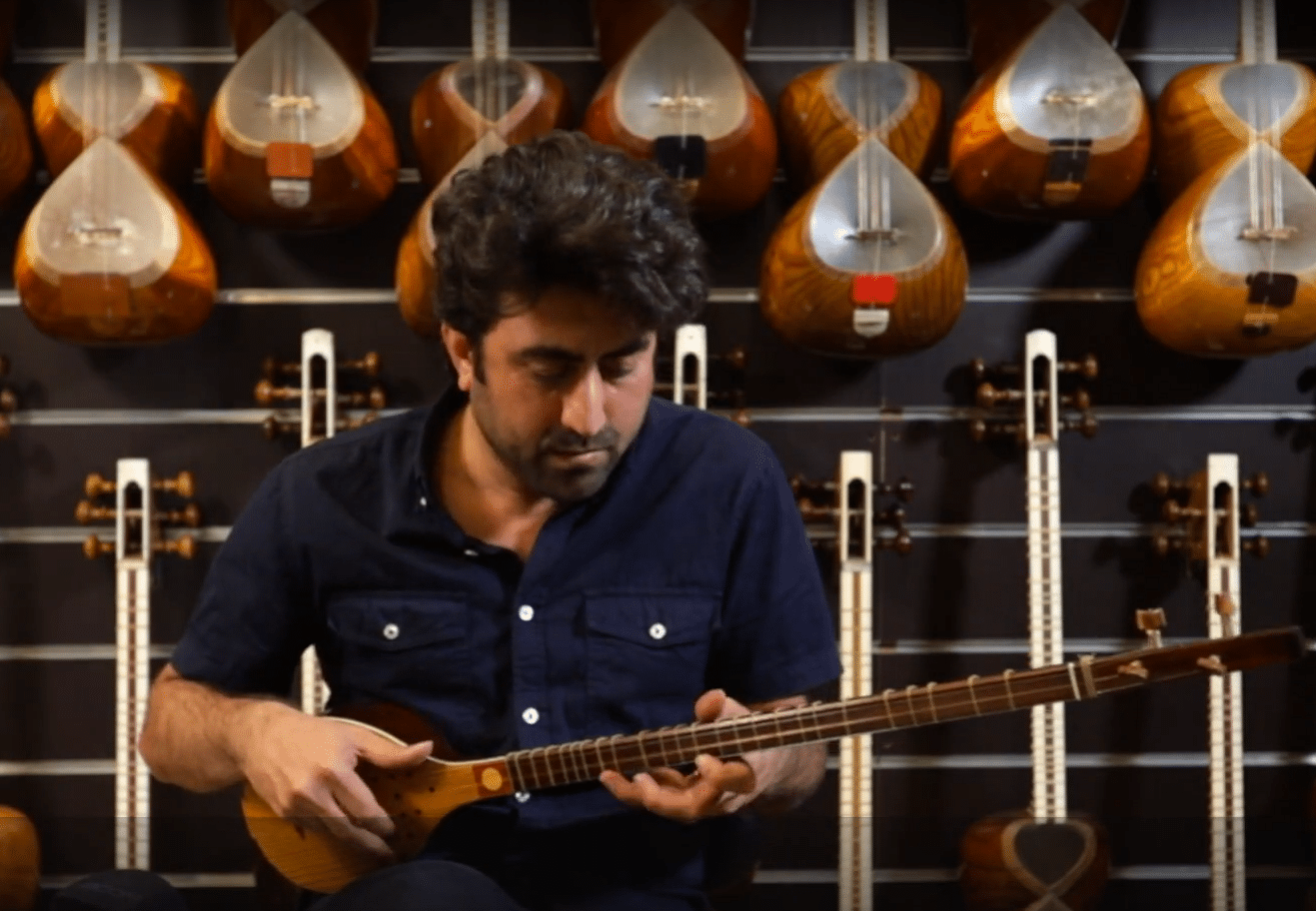
Methods of Tuning a Setar
There are two primary methods for tuning a setar:
- Using a Tuner (Electronic Method) – The simplest way to tune a setar is by using an electronic tuner, ensuring precise pitch accuracy.
- Aural or Auditory Method – This requires a trained ear and experience in recognizing musical notes. It involves tuning one string to a reference pitch and adjusting the others accordingly.
If you choose the auditory method, follow these steps:
- Start by tuning the first string using a tuner or another reference instrument.
- Use the G fret on the first string as a reference and adjust the second string to match.
- Pluck the string multiple times to memorize the pitch before adjusting the others.
- Continue tuning the remaining strings by matching them to the correctly tuned string.
To ensure accuracy, keep a tuner handy for verification.
Tuning with an Electronic Tuner: Step-by-Step
Tools Needed:
Clip-on electronic tuner (chromatic recommended)
Quiet environment
(Optional) Tuning app on smartphone
Step 1: Attach the Tuner Clip the tuner to the setar’s headstock (pegbox), ensuring good contact for vibration detection. Turn on the tuner and set it to “chromatic” mode.
Step 2: Select Reference Pitch Confirm the tuner is set to A440 (or your chosen reference). Most tuners default to A440, but some allow adjustment.
Step 3: Tune the First String (White String) Pluck the first string (closest to the floor). The tuner will display the note and indicate if it is flat (too low) or sharp (too high).
If tuning to standard (C-G-C-C), adjust the peg until the tuner reads “C” and the indicator is centered.
Step 4: Tune the Second String (Yellow String) Pluck the second string and adjust its peg until the tuner reads “G” (for standard tuning).
If your tuning system calls for a different note (e.g., F, A), adjust accordingly.
Step 5: Tune the Third String (Moshtagh/Drone String) Pluck the third string and tune it to “C” (standard) or the note required by your chosen tuning.
Step 6: Tune the Fourth String (Bam/Bass String) Pluck the fourth string (closest to your chin) and tune it to “C” (standard) or as specified.
Step 7: Double-Check and Fine-Tune After tuning all strings, recheck each one. Tuning one string can affect the tension and pitch of the others. Repeat the process until all strings are stable and in tune.
Step 8: Play Simple Scales or Melodies Test your tuning by playing basic scales or melodies. If anything sounds off, make small adjustments as needed.
Practical Tips:
Always tune up to the note (tightening the string) rather than down, to ensure stable tension.
Make small, gradual adjustments to avoid breaking strings or damaging the pegs.
If the tuner struggles to detect the pitch, try plucking the string more firmly or using a harmonic (lightly touch the string at the 12th fret and pluck).
Recommended Tuners and Apps:
Clip-on Tuners: TC Electronic PolyTune Clip, Snark ST-2, D’Addario NS Micro, Peterson StroboClip HDC
Apps: Fender Tune, GuitarTuna, Cleartune, Pano Tuner (all support chromatic tuning and adjustable reference pitch)
Tuning by Ear and Relative Tuning: Step-by-Step
Tools Needed:
Reference pitch (tuning fork, piano, keyboard, or another instrument)Quiet environmentPatience and attentive listening
Listen for “beats” (wavering or pulsating sounds) when two notes are slightly out of tune. Adjust until the beats disappear.Memorize the sound of common intervals (unison, fourth, fifth, octave) to improve your earPractice regularly to develop confidence and accuracy in tuning by ear.
Step 1: Tune the First String to a Reference Pitch Use a tuning fork (A440) or play the desired note on a piano/keyboard. Adjust the first string’s peg until its pitch matches the reference note (e.g., C for standard tuning).
Step 2: Tune the Second String by Interval Play the first string at the 5th fret (or the fret corresponding to the target interval) and pluck the second string open. Adjust the second string’s peg until the two notes sound identical (unison) or form the correct interval (e.g., a perfect fourth or fifth).
Step 3: Tune the Third and Fourth Strings Relatively Repeat the process for the third and fourth strings, using the appropriate frets and intervals. For example, play the second string at the 5th fret and match the third string open, or use other reference frets as specified by your tuning system.
Step 4: Check Chords and Melodies Play simple double stops (two strings together) or basic melodies to ensure the strings blend harmoniously. Adjust as needed.
Step 5: Verify with a Tuner (Optional) If available, use an electronic tuner to confirm your tuning.
Practical Tips:
In How Many Ways Can You Tune A Setar?
The method mentioned above is called the “C-G-C-C” tuning and is recognized by most music professionals as the basic setar tuning. But it is good to know that this method is not the only method of tuning a setar. But you can use many other methods to tune your instrument. Some of the common tuning methods are:
The Dastgah System: Foundation of Persian Setar Tuning
Overview of the Dastgah Framework
Persian classical music is organized around the Dastgah system, a sophisticated modal framework comprising seven main dastgahs and five avaz (secondary modes). Each dastgah is more than a scale; it encompasses characteristic motifs, melodic tendencies, ornamentation, and a repertoire of short pieces (gusheh).
The twelve primary modes are:
Main Dastgahs: Shur, Mahur, Homayun, Segah, Chahargah, Rast-Panjgah, Nava
Avaz (Derived Modes): Abu Ata, Bayat-e Tork, Afshari, Dashti, Bayat-e Esfahan
Each mode has its own emotional character, melodic contours, and tuning preferences. For the setar, tuning is often adjusted to suit the dastgah or avaz being performed, ensuring the instrument resonates with the modal center and key notes of the repertoire.
Microtones and Ornamentation
A defining feature of Persian music is its use of microtones—intervals smaller than a Western semitone. Special accidentals, such as koron (quarter-tone flat) and sori (quarter-tone sharp), are used to notate these pitches. The setar’s movable frets and flexible tuning make it ideally suited for these subtle inflections.
The Role of the Setar in Dastgah Performance
The setar is prized for its ability to express the nuanced ornamentation and melodic movement of Persian music. Its tuning is not fixed but adapted to the dastgah, the singer’s range, or the ensemble’s pitch, making tuning both an art and a science.
General Tuning Conditions
| Tone & String Condition | String 1 | String 2 | String 3 | String 4 |
|---|---|---|---|---|
| High-pitched sound with tight strings | C | G | C | C |
| Two half-steps lower tuning | B♭ | F | B♭ | B♭ |
| Three half-steps lower tuning | A | E | A | A |
Shur Dastgah Tunings
Shur is the primary dastgah in Iranian music, from which most other dastgahs and songs are derived, except for the Dastgah of Chahargah.
| Tuning Type | String 1 | String 2 | String 3 | String 4 |
|---|---|---|---|---|
| Shur Sol | C | G | C | F |
| Shur Re | C | G | D | D |
| Shur Do | C | F | C | C |
| Shur La | C | G | A | D |
Abu Ata Dastgah Tunings (Related to Shur)
| Tuning Type | String 1 | String 2 | String 3 | String 4 | Description |
|---|---|---|---|---|---|
| Abu Ata Do | C | G | C | F | Derived from Shur Sol |
| Abu Ata Sol | C | G | D | D | Derived from Shur Re |
| Abu Ata Fa | C | F | C | C | Derived from Shur Do |
| Abu Ata Re | C | G | A | D | Derived from Shur La |
Bayat Turk Dastgah Tunings
For the Bayat Turk, as described by Iranian musician Ahmad Abadi:
| Tuning Type | String 1 | String 2 | String 3 | String 4 |
|---|---|---|---|---|
| Bayat Turk C♭ | C | F | C♭ | C♭ |
| Bayat Turk Standard | C | G | C♭ | F |
| Bayat Turk Do | C | G | C | C |
| Bayat Turk E♭ | C | F | E♭ | E♭ |
| Bayat Turk Fa | C | F | C | C |
Other Dastgahs
| Dastgah | String 1 | String 2 | String 3 | String 4 |
|---|---|---|---|---|
| Afshari Dastgah | C | G | C | C |
| Dashti Dastgah | C | G | A | D |
Homayoun Dastgah Tunings (Similar to Abu Ata)
Homayoun Dastgah shares the same tunings as Abu Ata in terms of the setar:
| Tuning Type | String 1 | String 2 | String 3 | String 4 |
|---|---|---|---|---|
| Homayoun Mi Karan | C | G | D | D |
| Homayoun Re Karan | C | G | C | C |
| Homayoun La Karan | C | G | A♭ | D |
| Homayoun La Karan 2 | C | F | G | C |
| Homayoun Sol Karan | C | F | G♯ | E♭ |
Mahour Dastgah Tunings
Mahour Dastgah offers the greatest tonal range for the setar. It is the base tuning for the instrument:
| Tuning Type | String 1 | String 2 | String 3 | String 4 |
|---|---|---|---|---|
| Mahour Do | C | G | C | C |
| Mahour Standard | C | F | C | C |
| Mahour Sol | C | G | C | F |
Common Setar Tuning Variations
Tuning the setar is not a one-size-fits-all process. Instead, a variety of tunings are used, each tailored to the dastgah, the piece, or the performer’s preference. Below is a table summarizing the most widely used tunings, followed by detailed explanations and context for each.
Table: Common Setar Tuning Variations
| Tuning Name / Dastgah | String 1 (White) | String 2 (Yellow) | String 3 (Moshtagh/Drone) | String 4 (Bam/Bass) | Context / Notes |
|---|---|---|---|---|---|
| Standard (C-G-C-C) | C | G | C | C | Basic, bright sound |
| Shur Sol | C | G | C | F | Dastgah-e Shur (Sol variant) |
| Shur Re | C | G | D | D | Dastgah-e Shur (Re variant) |
| Shur Do | C | F | C | C | Dastgah-e Shur (Do variant) |
| Shur La | C | G | A | D | Dastgah-e Shur (La variant) |
| Mahur Do | C | G | C | C | Dastgah-e Mahur (Do) |
| Mahur Standard | C | F | C | C | Dastgah-e Mahur (Standard) |
| Mahur Sol | C | G | C | F | Dastgah-e Mahur (Sol) |
| Homayoun Mi Karan | C | G | D | D | Dastgah-e Homayoun (Mi Karan) |
| Homayoun Re Karan | C | G | C | C | Dastgah-e Homayoun (Re Karan) |
| Homayoun La Karan | C | G | A♭ | D | Dastgah-e Homayoun (La Karan) |
| Abu Ata Do | C | G | C | F | Avaz Abu Ata (Do) |
| Bayat Turk Standard | C | G | C♭ | F | Avaz Bayat-e Tork (Standard) |
| Afshari | C | G | C | C | Avaz Afshari |
| Dashti | C | G | A | D | Avaz Dashti |
| Lowered Tunings | B♭ | F | B♭ | B♭ | Two half-steps down |
| Lowered Tunings | A | E | A | A | Three half-steps down |
Conclusion
The setar is one of the oldest and most popular Iranian instruments, belonging to the tanbur family. It originally had three strings, but over time a fourth string was added. To achieve the best sound, the instrument must be tuned correctly. To learn more about setar tuning and different tuning methods, read The Comprehensive Guide to Maintaining a Persian Setar.